| Prep Time: 25 mins | Cook Time: 40 mins | Total Time: 65 mins |
| Serves: 9-inch quiche | Oven Temp: 375° F |
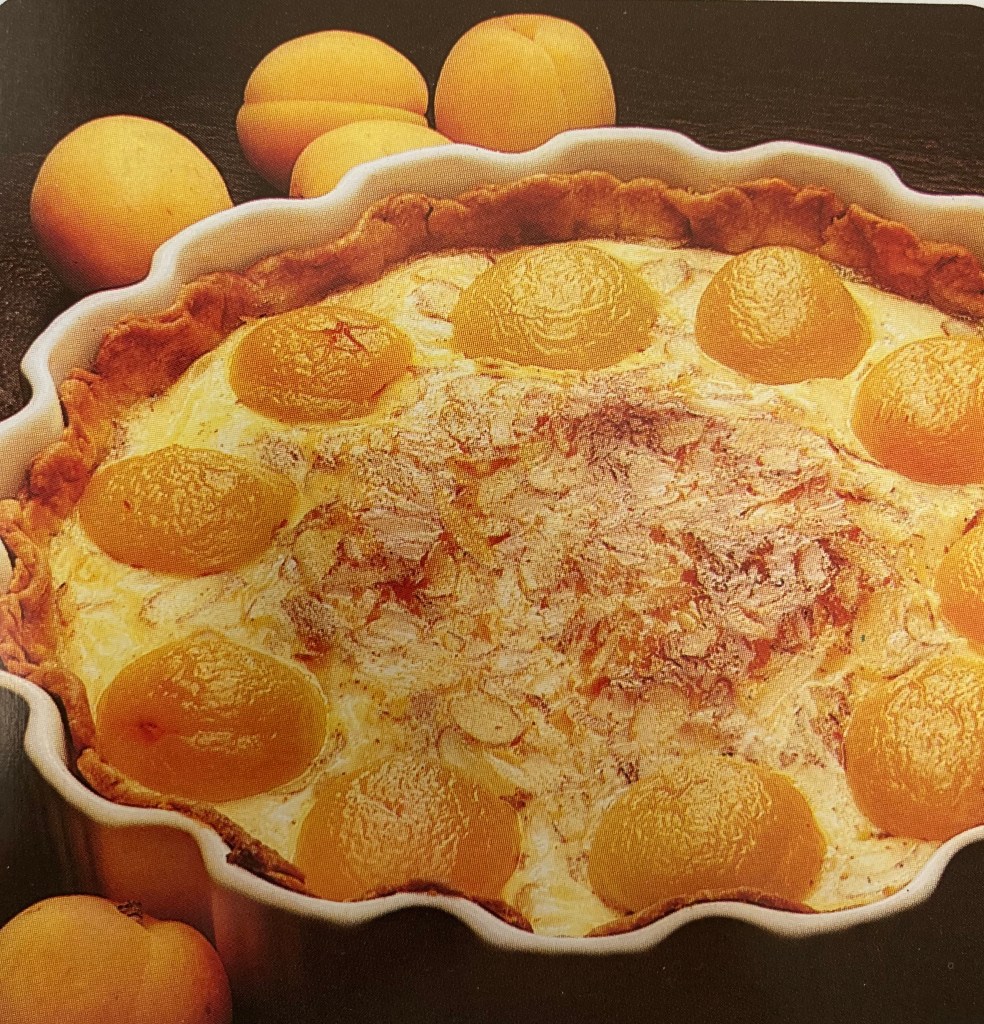
This Apricot Quiche is a triple treat; it is attractive, easy to make and good to eat, with the flavors blending beautifully together to enhance each other.
From: My Great Recipes, 1981
INGREDIENTS
| 1 | 9-inch ready-made pastry shell | |
| 16 | oz | apricot halves |
| 2 | eggs | |
| 1½ | c | half-and-half |
| 1 | T | cornstarch |
| 2-3 | T | sugar |
| ¼ | t | nutmeg |
| ½ | t | almond extract |
| ¼ | c | sliced almonds |
STEPS
- Prebake pastry shell at 375° F for 10 mins.
- Meanwhile, thoroughly drain apricot halves. Set aside.
- Beat eggs and half-and-half. Stir in a mixture of the cornstarch, sugar, and nutmeg. Add the extract and almonds. Mix until well combined.
- Pour into pastry shell. Bake at 375° F for 15 mins.
- Arrange apricot halves around the outer rim of the shell. Bake 15-20 mins longer or until golden and firm. Cool.
TIPS
- Drained canned peach halves or plums can be substituted for the apricots.
My Notes
This is a beautiful early autumn treat. When stone fruits are in season, suspend apricots in a custard flavored with nutmeg. Pop the quiche under the broiler at the very end to add a lovely caramelization to the tops of the apricots.
History of Apricots
Although the exact origin of apricots has been disputed, documentation of cultivation has existed for centuries in Central Asia and the Middle East. John Claudius Loudon, the Scottish botanist, recorded that it had a wide native range, Armenia to the Himalayas, China, and Japan.
Apricots belong to the same family (Rosacae) as peaches, cherries, and almonds. This might seem strange, since almonds are nuts. If you open up an apricot, the stone inside will resemble an almond, and in fact, almonds have a fruit surrounding them before they are processed commercially. Don’t eat an apricot pit though! Apricot pits contain the poison hydrogen cyanide.
The Spanish brought apricots to the Americas, although the plants did not thrive in the temperate eastern climate. They finally took root in the California missions, and have thrived in the California Mediterranean climate ever since.
In 1792, English Capt. George Stockdale of the Vancouver recorded the first major crop of apricots in Santa Clara, along with “apple, peach, pear, … and fig trees”. Growth continued over time, and exploded after World War II.
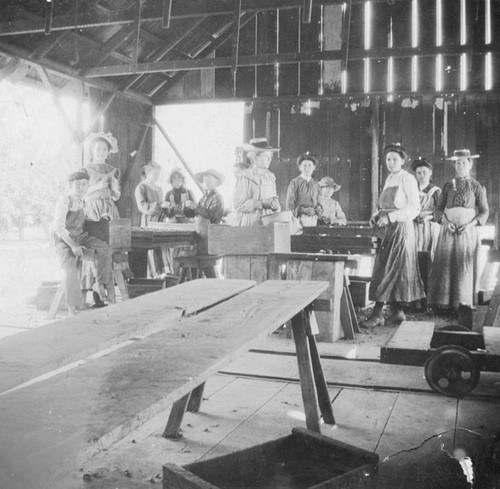
An apricot camp near Santa Ana about 1905. Women, in aprons, long dresses and hats, and children work together to sort the fruit into trays. Photo labelled Dunstan Apricot Camp.
Today, 85% of apricots grown in the United States are grown in California. Apricots mature in early summer, which is why you can sometimes find them in late May. Fresh apricots are only available until August, but you can find processed apricots all year round.
Apricots are hugely popular in the Middle East; Turkey and Iran are the world’s largest producers.

Bibliography
- Vancouver, Capt. George. A Voyage of Discovery. George Stockdale, London, 1801, Vol. 3, p.23
- “An apricot camp near Santa Ana about 1905”. c1905 (issued). Santa Ana History Room photograph collection. Santa Ana Public Library. Source
- Agricultural Marketing Resource Center. Apricots. Iowa State University.
 Trilo Bytes